Art: Everybody knew everybody. I carried papers, and that helped me, too. I knew everybody. I mean, you may not have known all the old people, but you knew all the children and most of the adults.
… Growing up, of course movies was the thing. We did not have TV. TV came along in 1951 when I was 16 years old. Prior to that, radio. We had only one radio – a Philco. And family was really together.
I listened when I came home from school – to Captain Midnight, and I had a Captain Midnight badge. … I listened to the Captain Midnight and Jack Armstrong. They had the soap operas, but they were not something the schoolchildren were interested in. The soap operas were generally over by the time we got home at 4 p.m. or so.
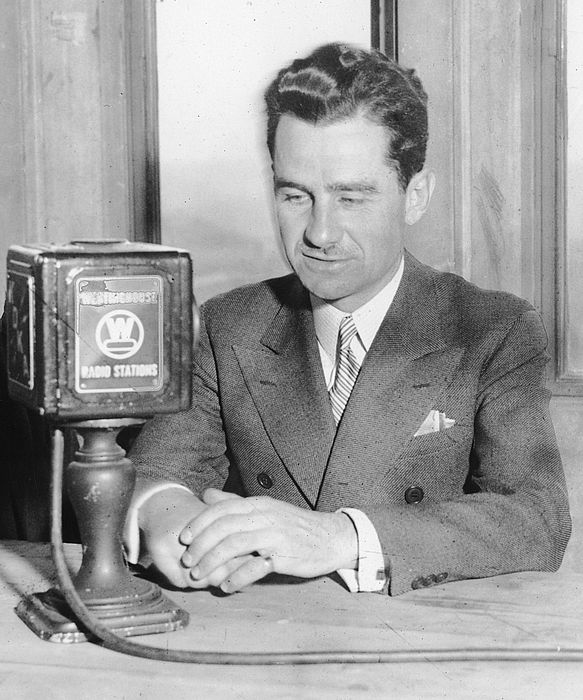
And then for the next two hours or so, everybody listened to the news together. Lowell Thomas and Gabriel Heatter, Edward R. Murrow later. Lowell Thomas was a big one. We trusted him. And he was a great traveler, you know, Himalayas and – he’s the one who really discovered Lawrence of Arabia. [Thomas] was a young newsman, and he heard about this romantic figure in the desert. And he filmed a lot of that and then they had – long before my time – private showings, you know. He made money and also made Lawrence famous. They fell out near the end of the relationship.
But movies was the big thing. We went to the Royal. Now, you could go to Onancock. You could go to Pocomoke. Pocomoke was the ultimate. I mean, we seldom went to Salisbury. That was beyond the limits. But Pocomoke had a movie theater called the Marva. … I spent a lot of time, as did your dad, in Cape Charles in the summer, because we had relatives there. And they had two theaters there: the Radium and the Palace. And the Palace is still there.
There were more. There were others. There was a black theater here, which the building still stands in Whitesville, and I can’t think what that was called. But we went to the Royal. The Royal was built as a theater. Some of these others – like the one they just tore down in Painter was a reconditioned house, a storage building or something. It’s just been torn down, why I don’t know. But the Royal was built in the late ’30s. Remember Hee Haw? Grandpa Jones of Hee Haw … I don’t remember seeing him – but he was here. That was – it was like a vaudeville kind of thing. And I do remember one of them – Lash LeRue, and he sang was a whip. That’s the way he’d get the wrongdoers, you know. He’d throw that whip and trip them up and they’d fall down, you know. And he did rope tricks and all, and when he was doing it, a spotlight next to the curtain got on fire. And that could have caused panic. He was very calm. Lash LeRue, I remember, I was there. He said, “I’ll care of that.” And he went over and stamped out the flames, and maybe somebody came down from the fire station. I’m not sure, but he maintained calm while he performed, so he was kind of a hero. About once every two or three months, they’d have a state show. …
Lee: Was it a room with folding chairs or an actual auditorium with a stage?
Art: … An actual auditorium – it was built to be a theater. It was – you’ve been to the Roseland in Onancock. Well, yeah, it was like the Roseland in layout. It did have balconies, though. It had two – over the restrooms were little – I never went up there – were balconies. And the owners would sit there and somebody he had invited to see a movie. You know, kind of like a private screening. Sit up there. John Herbert Hopkins. It was a Hopkins enterprise. Hopkins owned Parksley. Hopkins owned Parksley almost lock, stock and barrel.
The Hopkins, old man John H. – my father worked for him, ran the hardware store. So, that’s how I knew all about the Hopkins. Old man John H. was probably a grandson of the Hopkins Brothers Store in Onancock. The Hopkins were always merchants. … And he was an enterprising merchant – John H. was – I remember as a very little boy, he gave me some chewing gum. I remember that. I was in the store waiting for my father to close up. By the way, retail establishments – those people worked very hard. On a Saturday morning, you’d get in at 7:00 or 7:30, and you wouldn’t leave there until shortly before midnight. Midnight, because of blue laws, they would have stayed open longer, but the law wouldn’t let them do it. Those people worked from early in the morning – now, you had lunch break, but – til nearly – that was Saturday nights. Generally weekdays nights, I guess my father would get home 7:00 or something like that and have dinner.
But anyhow – John, how he made his money, aside from inheriting it, was he was county treasurer. And at that time, you got a commission for what you collected, and he apparently was relentless in pursuing county debtors. And you know, if you don’t come up with that money, I’m going to shoot that hog and take the hog away – that was the stories they told. He lived to 103 when the railroad came through, which was the reason Parksley was created. He came here to live. …
He had two sons and he lived to be quite an old man, but the sons died in their ’50s – both of them, it was rather tragic. And then the Hopkins possessions, which were a hardware store, lumber yard, electric company until the REA came, water works, which they donated at the time – they had the first water works before it became a municipal project, when the WPA and PWA put money in the ’30s. I can’t think – furniture store – I can’t think of all the things they had, but they were the merchant princes of Parksley.
John Herbert was not much interested in that kind of thing, but they had movies for years over the hardware store. You went up the steps and saw the movies. And he persuaded the old man, his grandfather – his father was dead then – he persuaded the old man to give him land. He wanted to put up a movie theater. And it was a fairly narrow aisles, and they always said the old man wouldn’t give him the couple, three more feet that he wanted. You know, “you don’t need – let the SOBs get in there the best way they can. You know, we’re not gonna have a boulevard through here.” And ran it, and he did well with it until TV. TV put him out of business.
from an interview with Art Fisher, spring 2013



 Eastern Shore Stories